
4 Signs Your Team Is Stuck (and Which Gear to Shift Into Next)
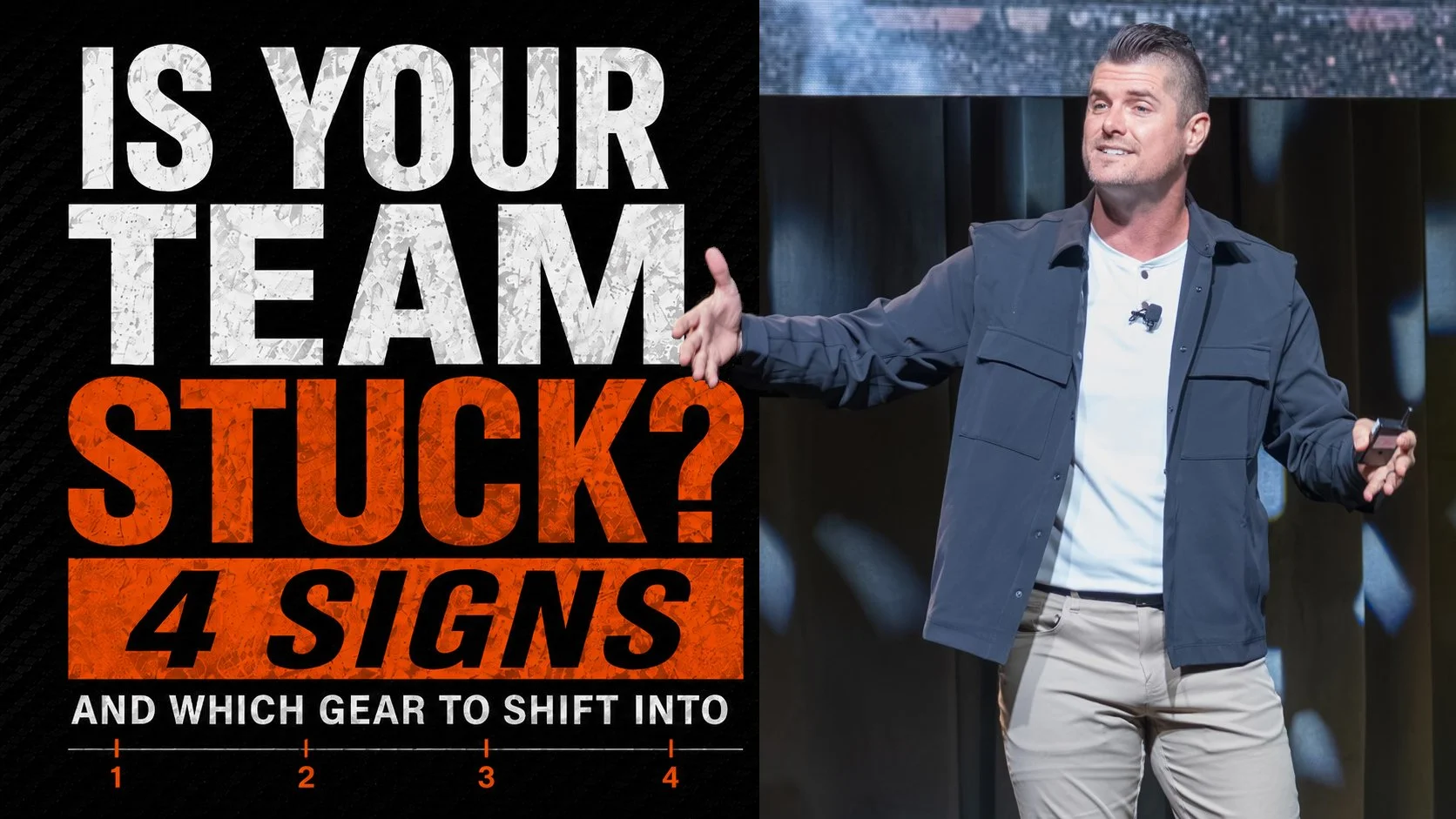
What are the signs your team is stuck? Watch for four things: the same few people answer every question, decisions get made in the meeting but questioned in the hallway, the calendar is packed but decisions are slow, and nobody challenges ideas anymore. Each sign points to a different problem, and each one requires a different fix.
I'm Bryce Kenny, a Guinness World Record holder in Monster Jam, a former Fortune 500 corporate recruiter, and a leadership keynote speaker who works with organizations like Deutsche Bank, Chick-fil-A, and KOA. One of the biggest misconceptions in leadership is thinking a team is stuck because they're not working hard enough. Most of the time, they're working incredibly hard. They're just stuck in the wrong gear. A race car in the wrong gear can have the pedal on the floor and still lose speed. Teams are not much different.
When I walk into an organization, I'm looking for a few observable signs that tell me when and where a team is stuck. Here they are, along with the questions that get things moving again.
Watch the full story below:
The 4 Signs Your Team Is Stuck, One for Each Gear
These four signs map directly to the G.E.A.R. Framework, the four-gear leadership system I teach: Growth, Engagement, Acceleration, and Risk. Every stuck team I've worked with shows at least one of these signs. Most show two or three.
Sign 1: The same three people answer every question
This is the Growth sign. If the same three people answer every question and everyone else sits there quietly, individualism and self-belief have stalled. The team hasn't stopped caring. They've stopped believing their contribution changes anything. When growth stalls at the individual level, the whole team's ceiling drops with it.
Sign 2: Decisions get made in the meeting but questioned in the hallway
This is the Engagement sign. When a plan gets a yes in the room and a debate in the hallway, people understood the plan but never truly bought into it. That gap between understanding and commitment is exactly why half commitments are more dangerous than full ones. A half-committed team will execute just enough to look aligned and just little enough to guarantee the plan stalls.
Sign 3: The calendar is packed but the decisions are slow
This is the Acceleration sign, and it's the easiest one to spot. The team mistakes activity for momentum, and they spend more time discussing the work than actually doing the work. I've written before about how high-performing teams accelerate, and the short version is this: a busy team debates the same idea for the third meeting in a row, while an accelerating team tested something since the last meeting.
Sign 4: Nobody challenges an idea anymore
This is the Risk sign. If nobody asks the hard questions or offers a different perspective, ownership has disappeared. Here's the part most leaders get wrong: silence looks like alignment. But it's often a sign that people no longer believe the outcome belongs to them. A quiet room isn't a healthy room. It's a room that has stopped caring who wins.
And the warning leaders miss most? A full calendar. Leaders assume busy means productive. I see it as a signal to ask whether the team is actually moving or just staying occupied. That's the difference between being busy and being in the right gear.
How to Tell If Your Team Is Stalled or Just Taking a Pit Stop
People always ask me how to tell if a team is just catching its breath or has actually gotten stuck. The difference is simple: a pit stop always has a purpose. A comfort zone doesn't.
A team that's recovering can tell you exactly what they're preparing for. They know what they're learning, what they're improving, and what has to happen before they get back in the race. A stuck team can never answer those same questions. They keep explaining why now isn't the right time, why they need another meeting, or why next quarter would be better timing for everybody.
The one question every leader should ask their team this week: What are we preparing for? Then listen. If the room gets quiet or the answers get vague, you're probably not in a pit stop anymore. Comfort zones are pit stops, but they're not where the race is won.
The 2027 Problem: What a Team Performance Plateau Sounds Like
A team performance plateau rarely announces itself. It hides inside positive conversations. I was recently in a room with the leadership team of a very mature franchise organization, and within the first few minutes I could tell they were stuck in the wrong gear. They were smart. They were experienced. They were genuinely committed to their brand. But nearly every important idea was being discussed as something they could do next year.
Leadership believed the team was performing because nobody was openly resisting the changes. Everyone agreed the ideas were good. The conversations were positive. The organization had decades of experience behind it. But agreement without a decision is still hesitation. And that mindset of "we'll just do it in 2027" had quietly become a comfortable way to avoid changing today.
When I named it, the room didn't get defensive. They recognized it immediately. Their problem wasn't a lack of talent or effort. They'd become comfortable relying on the playbook that made them successful before, while the business around them was already asking for a different gear.
That's why I tell leaders to listen closely to the timeframe their team uses. When every meaningful change belongs to next quarter or next year, you might be looking at a team that sounds aligned but has lost all of its urgency.
Getting Unstuck at Work Starts With the Right Question, Not More Pressure
If you recognize that your team is stuck, your first move should not be pushing everybody harder. It should be figuring out which gear your team is actually in. One of the biggest mistakes leaders make is applying pressure to a growth problem, more meetings to an engagement problem, or more incentives to a risk problem. The wrong solution just creates more frustration for everyone involved.
Instead, match the question to the gear:
Growth: What do we need to be learning right now?
Engagement: Where are we half-committed as an organization?
Acceleration: What decision needs to be made today?
Risk: What changes if we don't solve this?
Those four questions will tell you more than another hour-long meeting ever could.
I saw this firsthand with a franchise organization that realized they had an acceleration problem. Their calendar was full, but every decision was slow. Once leadership started shortening the distance between discussion and action, momentum returned. Within about 90 days they weren't having more meetings. They were making more decisions, testing more ideas, and moving faster because they had finally shifted into the right gear.
And here's the counterintuitive part: the first sign a team is getting unstuck is not better results. It's better decisions. They stop waiting for perfect certainty, they make the next move, and momentum starts to build again. Results follow the decisions. They never lead them.
Frequently Asked Questions
How do you know if your team is stuck or just recovering?
A recovering team can tell you exactly what they're preparing for, what they're learning, and what has to happen before they get moving again. A stuck team can't answer those questions and keeps explaining why now isn't the right time. Ask your team "What are we preparing for?" and listen. Vague answers mean you're in a comfort zone, not a pit stop.
What is the first sign a team is getting unstuck?
Better decisions, not better results. Teams that are getting unstuck stop waiting for perfect certainty and start making the next move, which is what rebuilds momentum. Improved results show up later, after the decision-making speed changes.
Why doesn't pushing a stuck team harder work?
Because most stuck teams are already working hard. They're stuck in the wrong gear, not short on effort. Applying pressure to a growth problem, more meetings to an engagement problem, or more incentives to a risk problem just creates frustration. Diagnose the gear first, then apply the matching fix.
What questions should a leader ask a stuck team?
Four questions, one per gear of the G.E.A.R. Framework. Growth: what do we need to be learning right now? Engagement: where are we half-committed? Acceleration: what decision needs to be made today? Risk: what changes if we don't solve this? The answers reveal which gear the team is stuck in.
A stuck team is almost never a lazy team. It's a hard-working team in the wrong gear, and the four signs above tell you exactly which one. That diagnosis is the starting point of the G.E.A.R. Framework: identify the gear, ask the matching question, and shorten the distance between discussion and action.
Bring the G.E.A.R. Framework to Your Next Conference
Bryce Kenny delivers this keynote to franchise conventions, corporate leadership summits, and association events. If your team looks busy but the decisions have slowed, the meetings agree but the hallways don't, and every big idea belongs to next year, this keynote gives them a shared language to diagnose where they're stuck and the exact questions that get them moving again.